A post popped up in my Facebook feed this week from The Cycling Week with the headline “Scientists Say Cyclists May Keep Their Brains Younger for Decades.” My first instinct — as it should be with anything wearing a “BREAKING” banner and stock virus imagery — was a raised eyebrow. But I dug in, and it turns out there’s a real, peer-reviewed study underneath the clickbait. And it’s worth talking about as it relates to cycling and brain health.
The study was published in June 2025 in JAMA Network Open, led by Dr. Liangkai Chen at Huazhong University of Science and Technology, with collaborators at the University of Sydney. They followed 479,723 UK Biobank participants for an average of 13 years, tracking how people’s main mode of transport related to their later risk of dementia.
What the Evidence Says About Cycling and Brain Health
The findings are genuinely striking as it pertains to cycling and brain health . People who cycled — or mixed cycling with other forms of travel — had a 19% lower risk of all-cause dementia and a 22% lower risk of Alzheimer’s than those relying on non-active travel. For young-onset dementia (before age 65), the protective effect jumped to 40%. Brain scans on a subset of participants also showed cyclists had greater volume in the hippocampus, the memory region that’s first to suffer in Alzheimer’s.
Why Cycling Specifically?
Why cycling specifically? The leading theory is that it’s an aerobic workout plus a cognitive workout — balancing, navigating, judging traffic, scanning the road — all with your heart rate up. That combination seems to do something for the brain that walking alone doesn’t quite match.
The Honest Caveats
Now, the honest caveat: this is an observational study, not a controlled trial. It shows a strong association, not proven cause-and-effect. The “younger for decades” framing belongs to the aggregator, not the researchers. And the people who cycle for transport tend to be healthier in other ways the study can only partly adjust for.
But it’s a large, serious, peer-reviewed study, and it lines up with a growing body of evidence pointing in the same direction.
The takeaway for Active Agers? The bike you ride for the joy of it, the fitness, the freedom — may also be quietly doing some of the most important work going on in your body. Keeping the lights on upstairs.
So clip in and ride. The science is finally catching up to what we already suspected.
Source: Hou C, et al. Active Travel Mode and Incident Dementia and Brain Structure. JAMA Network Open. 2025;8(6):e2514316. Read the full open-access paper here.
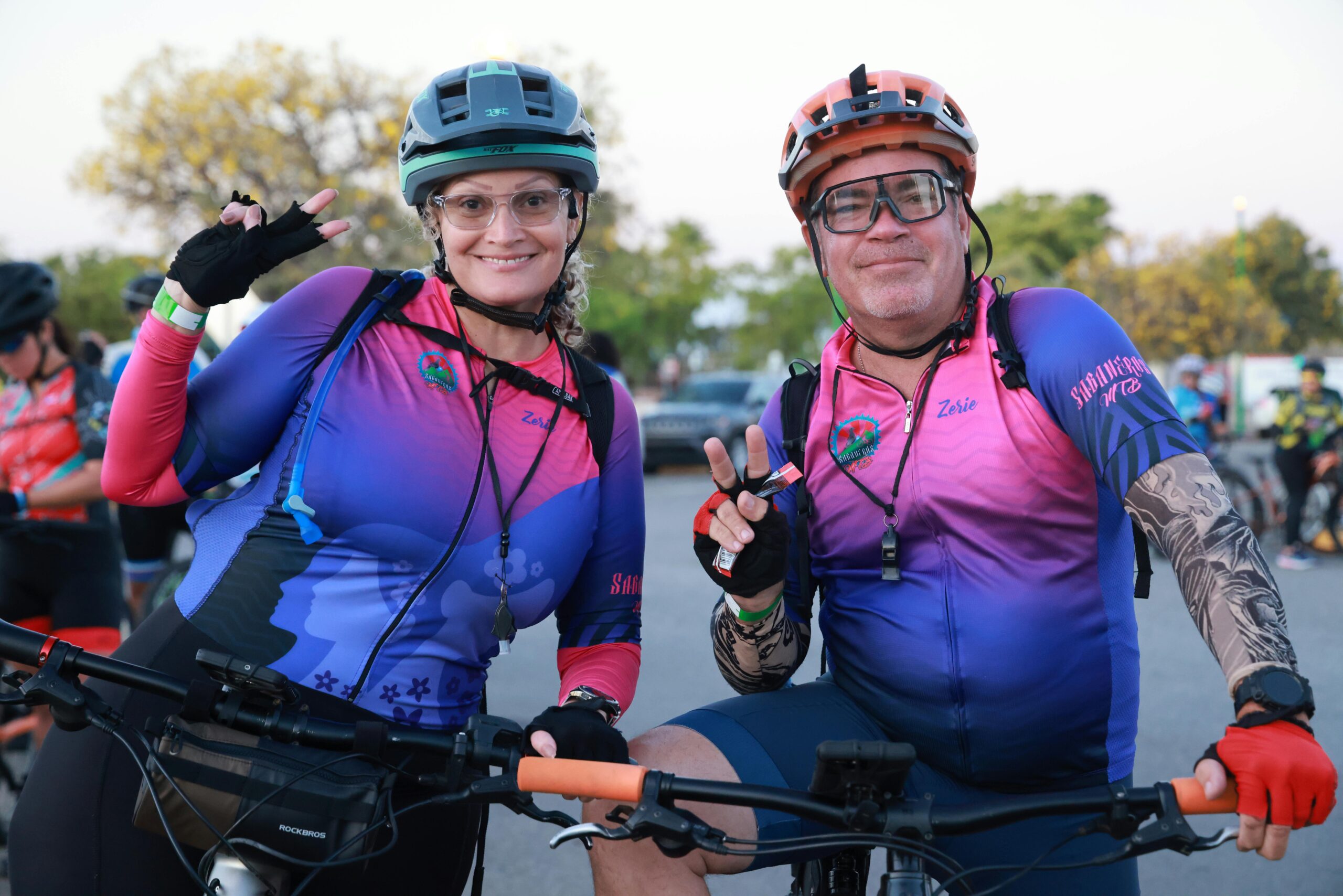
Featured image: Detrás del Fotógrafo via Pexels.
Original Facebook post: The Cycling Week.